

Start with a buyer, not a warehouse
You do not need a warehouse to become a wholesale distributor. You need a buyer, a supplier, and a deal that works for both sides.
That is the clean answer to how to start a wholesale distribution business. Find a business that repeatedly needs a specific product. Find a reliable source. Agree on price, delivery, payment, and who handles problems. Then get paid for connecting the two.
The supplier can keep the inventory, ship it, invoice the buyer, and pay you a commission. If you buy goods, you can pre-sell a small order before committing cash.
You still have to sell, check suppliers, document the deal, and protect the buyer relationship. But a forklift, staff, vehicles, and shelves full of stock are later tools, not admission tickets. Prove somebody wants to buy before you build anything else.
Three cash-light ways to make the first deal
1. Manufacturer or supplier sales representative. The supplier owns the stock, invoices the buyer, collects payment, and pays you an agreed commission. Put the territory, protected accounts, commission rate, payment trigger, returns, and termination rules in writing. Know whether you earn commission when an order is accepted or after the supplier collects.
2. Drop-ship distributor. The buyer orders through you, the supplier ships directly, and you keep the spread after supplier and fulfillment costs. You control pricing and the account, but you own the customer service problem when a carton is late, short, damaged, or wrong. Confirm whether packaging identifies the supplier and whether it may contact your customer.
3. Pre-sold order. Get written demand, a purchase order, or an agreed deposit before committing to inventory. Documents should cover the exact product, inspection, delivery, cancellation, and what happens to a deposit if the order cannot be filled. Have contracts and refund terms reviewed.
This is the useful version of how to start a wholesale business with no money. It does not mean literally zero dollars. Setup, samples, insurance, travel, software, legal review, and personal runway still cost money.
The six-step buyer-first sequence
1. Pick one product category you understand. Restaurant disposables, janitorial supplies, electrical fittings, salon products, or specialty ingredients are categories. “Anything businesses need” is not.
2. Find buyers first. Ask for exact specs, pack size, volume, reorder cycle, current price, delivery window, pain points, approval process, and required paperwork. A polite conversation is not an order.
3. Find suppliers for that demand. Bring a real specification and realistic volume. Ask about independent reps, blind drop shipping, or small opening orders. Get pricing and availability in writing.
4. Validate before you promise. Check samples, lead time, minimum order quantity, payment terms, returns, insurance, freight responsibility, and delivery. Run a test shipment when condition matters.
5. Close one small deal and get paid. Define product, quantity, price, freight, tax treatment, delivery, acceptance, and payment. Keep the order small enough to survive a mistake.
6. Repeat before adding inventory. Your wholesale distribution business plan can stay short: named buyers, verified suppliers, deal economics, responsibilities, risks, and the next reorder date.
How to find the buyer and the supplier

Start with buyers you can name. Visit local businesses during a quiet hour. Search industry directories and trade-association lists. Attend trade shows. Call or email purchasing managers with one specific question. Ask your network which supply problem keeps returning.
Do not lead with a logo. Try: “I am sourcing food-safe 32-ounce takeout containers. What do you use, how often do you reorder, and what would make you test another source?” Look for exact demand, not compliments.
For supply, contact manufacturers, importers, master distributors, and regional wholesalers. Visit category trade shows. Thomasnet provides a supplier discovery directory for industrial products and services. A listing is a lead, not proof.
Ask for current pricing, stock, lead times, opening requirements, samples, freight terms, returns, references, insurance evidence, and brand authorization. Confirm the legal business and bank account before sending money. U.S. Customs and Border Protection says importers must use reasonable care with entry documentation and duties in its import guidance. Check classification, restrictions, and landed cost before quoting imports.
The warehouse photo here shows supplier validation, not a required startup purchase.
Know what the deal actually pays
Here is one drop-ship example. It is made-up deal math, not an industry average.
A local gym group agrees to buy 500 cases of branded cleaning wipes at $42 per case. Your gross revenue is $21,000. The supplier charges $32 per case, or $16,000. Freight is $1,250, and payment processing plus shipment insurance costs $250.
- Buyer price and gross revenue: $21,000
- Supplier product cost: $16,000
- Freight: $1,250
- Processing and shipment insurance: $250
- Gross spread: $3,500
The gross spread is $21,000 minus $16,000 minus $1,250 minus $250. It is not your actual profit. Phone service, samples, travel, general liability insurance, bookkeeping, returns, damaged goods, unpaid invoices, your labor, and income taxes still come out somewhere.
If this were a representative deal instead, the supplier might invoice the $21,000 and pay you a stated commission under your agreement. That commission would be your business revenue, but it still would not equal take-home profit after your operating costs and taxes.
There is no universal wholesale distributor profit margin. Compare dollars, not just a markup percentage. Write down every cost and who absorbs a return, redelivery, shortage, card dispute, or bad debt before you quote the buyer.
Keep the setup short and real
Once a deal looks real, set up the business to handle it. The usual list is an entity, EIN, business bank account, bookkeeping, contracts, and appropriate insurance. State and local licenses vary. A resale certificate or seller's permit may apply, and regulated products can add separate approvals. Check the agencies responsible for your location, product, and sales-tax obligations.
The SBA launch guide points owners to registration, tax IDs, licenses, permits, banking, and insurance. It is a starting checklist, not a substitute for state instructions or legal and tax advice. For one state example, the California Department of Tax and Fee Administration explains seller's permits and resale certificates for wholesalers operating under California rules.
Use separate written agreements with the supplier and buyer. Spell out product specifications, pricing, payment, delivery, inspection, returns, warranties, insurance, confidentiality, protected accounts, and who is liable when something goes wrong. Do not copy a random contract and assume it fits a commission relationship, drop shipment, or deposit.
Keep business money separate from personal money. Reconcile every order against the quote, invoice, freight bill, payment, commission statement, credit, and refund. Clean books tell you whether the deal worked and help you quote the next one.
Add infrastructure only after the deals justify it
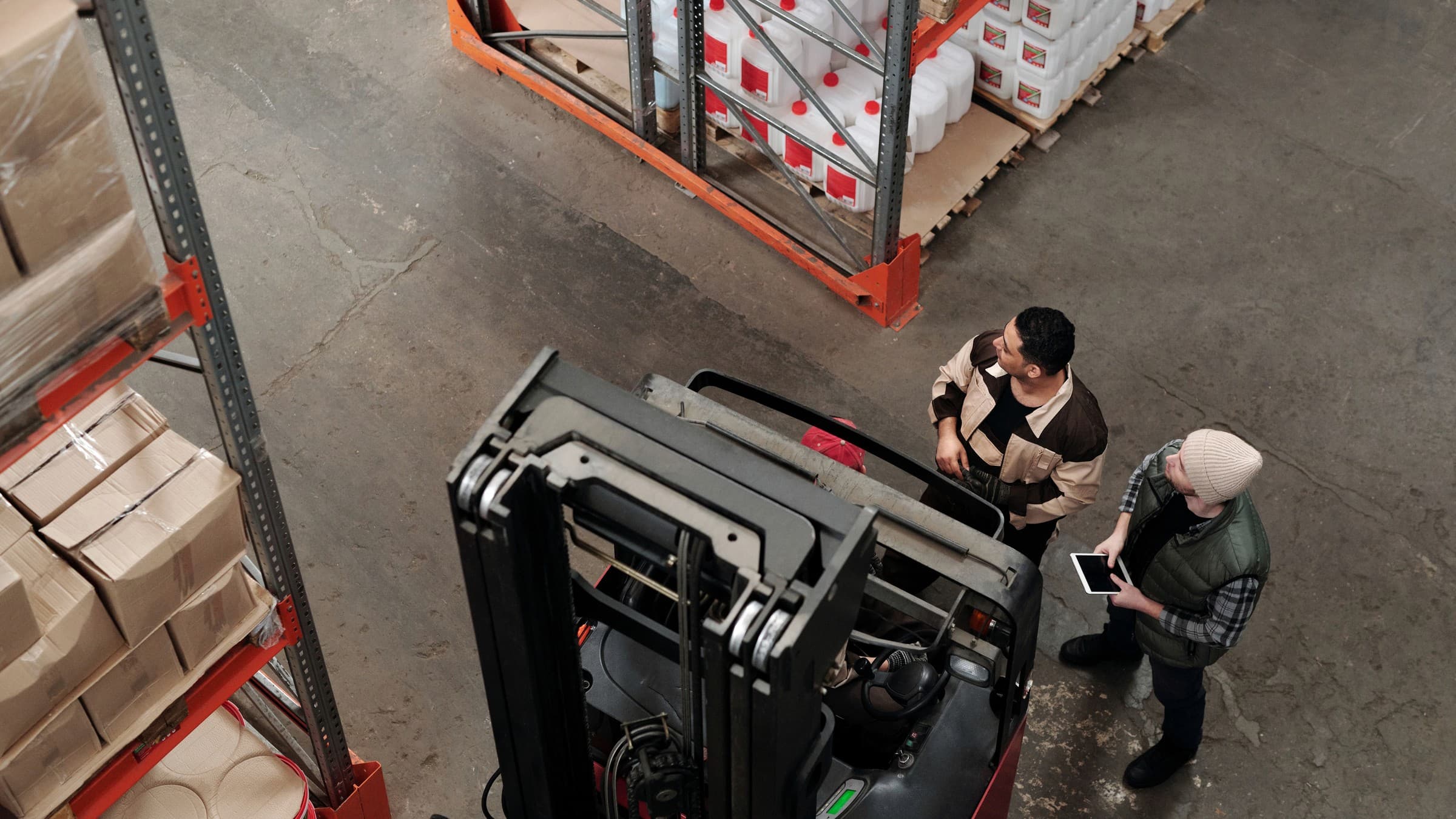
Inventory can make sense when buyers reorder the same items, local availability wins the sale, supplier lead times are too long, or better purchasing terms cover the carrying risk. Until then, stock is cash sitting in a box.
Use repeat orders to decide what comes next. A third-party logistics provider may be enough before your own space. A small warehouse may be justified when outside storage and pick fees cost more than controlled in-house operations, or when inspection and fast delivery are part of the value. Racking, scanners, an ERP, vehicles, and staff should each solve a measured bottleneck.
Before adding stock, track sales by item, reorder timing, supplier lead time, returns, damage, gross spread, and customer payment speed. Price rent, utilities, insurance, handling equipment, labor, delivery, shrinkage, and dead inventory. Do not assume volume will fix a weak deal.
The team photo below shows later-stage receiving and inspection. It is what operations can become after steady orders, not what you must build before making the first call.
Use financing after demand exists
Financing is not step one. First prove that buyers order, suppliers perform, the spread survives real freight and returns, and customers pay when promised.
After that, funding can support repeat purchase orders, inventory for proven items, receivables from creditworthy customers, or expansion equipment. A business line may help bridge recurring purchases and collections. Purchase-order financing may fit a confirmed order when a supplier must be paid before the buyer. Receivables financing may release cash tied up in eligible invoices. Equipment financing may fit durable warehouse assets once you actually need them.
Match the tool to the cash gap. Compare total cost, payment timing, fees, liens, collateral, guarantees, eligible uses, and what happens if the customer pays late or rejects the shipment. Never use fast, expensive payments to carry slow, uncertain inventory.
Read the wholesale inventory financing guide when repeat demand creates a specific funding need. You can also review working-capital options or request a funding review. Approval and terms depend on underwriting.