
Overview

If you are deciding how to start a dental practice, separate dentist pay from business profit before choosing a floor plan.
A dental practice can produce income and still be a weak business. The owner may earn money doing dentistry, yet have little profit for ownership risk.
The latest ADA Health Policy Institute data put average 2025 income for general dentists at $215,320. The same source says revenue rose 1.4% while expenses rose 4.9% over five years. An ADA practice research page reports average 2025 gross billings of $965,660 per general dentist in private practice. Billings can exceed the cash collected. Dentist income also includes pay for clinical work, so it does not equal business profit.
Build your dental practice business plan around cash collected. Subtract lab and clinical supplies, staff pay, overhead, fair pay for your clinical work, and debt service. What remains is business profit. If nothing remains, you bought a clinical job with added risk.
How to start a dental practice: choose the ownership path
Three common paths lead to dental ownership. Each puts a different risk on the owner.
| Path | What you get | Main risk | Potential fit |
|---|---|---|---|
| De novo startup | Full control over site, brand, layout, systems, and team | Patients and collections start near zero | Dentist with a clear market gap and patience to ramp |
| Acquisition | Existing patients, staff, equipment, and collections history | You may buy weak charts, old equipment, bad contracts, or seller dependence | Dentist who can perform deep diligence and manage a transition |
| Partnership or associate to owner | Time to learn the patients, staff, and numbers before buying | Vague valuation, control, and exit terms can create conflict | Dentist with a trusted owner and a written path |
For an acquisition, test deposits against tax returns, bank statements, payer reports, and the practice system. Review active patients, receivables, treatment backlog, staff, lease, equipment, and seller production that may leave.
For a partner track, put the buy in formula, voting, compensation, deadlock, and exit terms in writing before you build value for someone else.
The same sequence applies when researching how to open a dental practice. A de novo office starts with a blank operation. An acquisition starts with existing patients, staff, contracts, and hidden liabilities that must be checked before closing.
What does it actually cost to open a dental practice?
A disciplined de novo plan can cap the opening project at $500,000 by controlling the footprint, phasing equipment, and keeping working capital inside the project budget. Treat this as a planning model, not a quote or lending term. Replace every line with written local bids before signing a lease or ordering equipment.
A disciplined $500,000 startup model
- Construction and leasehold work: $150,000
- Clinical equipment and installation: $150,000
- Technology, software, and office setup: $25,000
- Legal, design, permits, and professional fees: $25,000
- Opening supplies, recruiting, and launch marketing: $50,000
- Working capital included in the project: $100,000
- Total project cost: $500,000
- Illustrative cash injection: $50,000
- Illustrative financing request: $450,000
The six uses above total $500,000. The $100,000 working-capital reserve is included inside that project total, not added on top. In this illustration, the $50,000 cash injection and $450,000 financing request fund the full project. The injection and financing structure are examples only. Approval, required borrower cash, collateral, and liquidity depend on underwriting.
Keep a four-operatory footprint within the cap
A four-operatory footprint can still follow the $500,000 model when the opening plan is staged. Build the plumbing, electrical, and room shell for four operatories, but equip only two rooms at first. Add the other rooms after collections and patient demand justify them.
Second-generation dental or medical space may reduce demolition and utility work when the existing layout passes professional review. Negotiate a tenant-improvement allowance before signing the lease, and confirm which costs the landlord will reimburse, when reimbursement occurs, and what happens after a delay.
Delay noncritical equipment and outsource services that do not need to be in house on opening day. Protect the $100,000 working-capital reserve instead of moving it into finishes, extra chairs, or premium technology. Local contractor, equipment, technology, and permit bids control whether a specific site can stay within the cap.
What does the dental equipment itself cost?
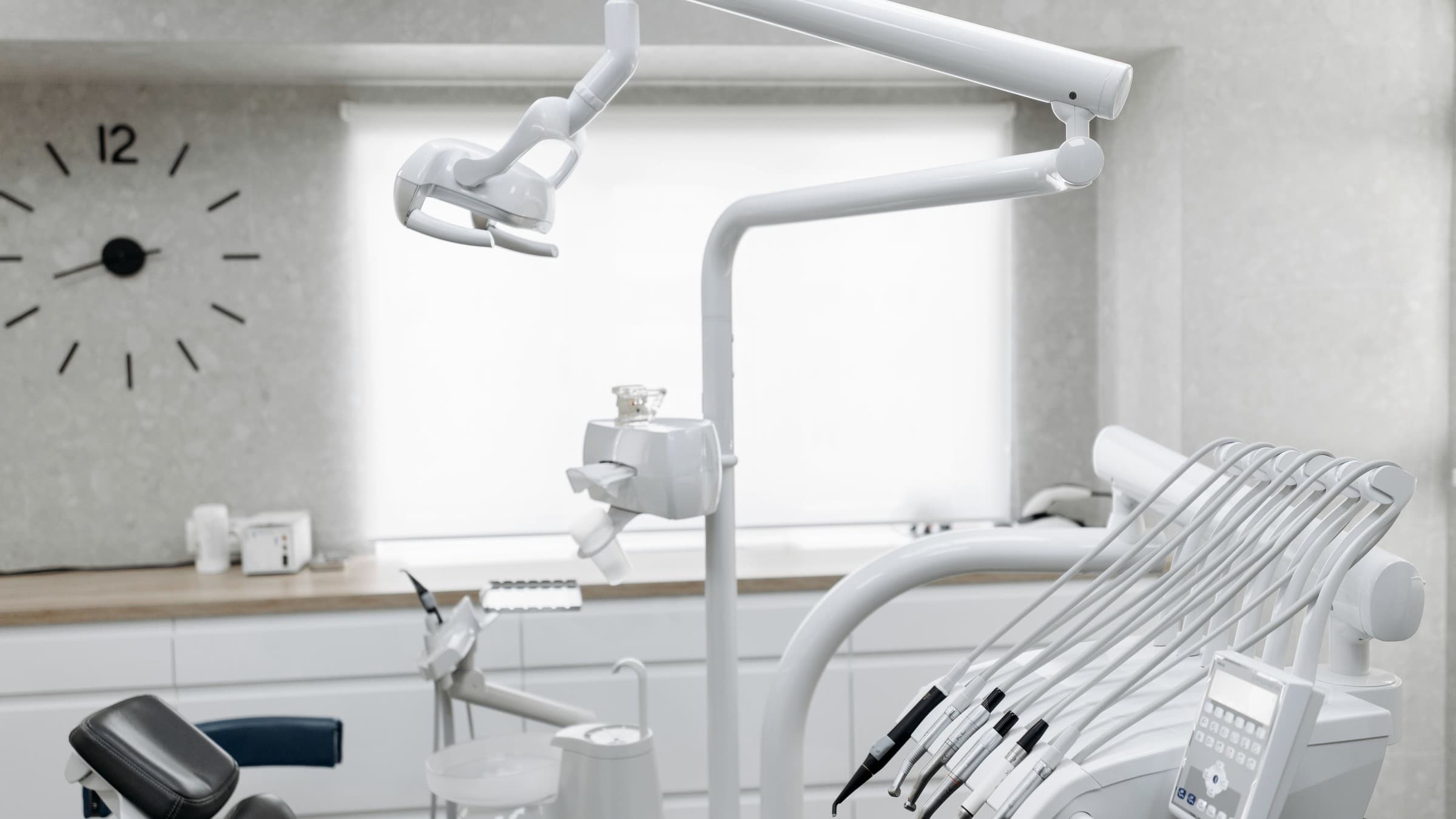
Commercial equipment guides provide useful quote-checking ranges, but they are not universal market averages.
- Equipped operatory: $20,000 to $40,000 per room for a chair, delivery system, light, and related setup, based on a DeSergo dental-office planning guide.
- Patient chair: roughly $3,500 to $11,000 in examples discussed by dental startup consultant Scott Leune and equipment supplier DHP in a startup-equipment webinar recap.
- Operatory cabinetry: roughly $6,000 to $8,000 per room in the same commercial planning source.
- CBCT imaging unit: under $40,000 for some current units cited in that source. Field of view, software, sensors, installation, and service can move the price materially.
A two-operatory opening does not need every premium tool on day one. Keep opening equipment and installation within the model's $150,000 allocation by separating purchases into opening critical, later, and outsourced. Price freight, plumbing, electrical work, installation, calibration, training, service contracts, software, consumables, and downtime. Those costs are often missing from the sticker price. Component ranges are quote-checking references only. Local bids control.
Can the area fill your chairs?
A cheap lease can be expensive if patients cannot find the office or the area cannot support another dentist. According to the American Dental Association startup guide, practices should screen for a dentist-to-population ratio of at least 1 to 3,000, while noting that some practices succeed in less favorable markets. Use the ratio to screen an area. It does not promise demand.
Map a 10 to 15 minute drive area. Count households, age groups, family growth, employers, schools, senior housing, competing offices, accepted plans, evening hours, languages, parking, transit, and visible vacancies. Call competitors as a prospective patient and record the next available new patient and hygiene appointment. Long waits may show unmet demand. Fast access everywhere may signal spare capacity.
Choose the patient mix on purpose. Contracted plans may fill chairs faster, but fees and write offs can squeeze margin. A fee for service model may collect more per visit but need stronger trust and marketing. Model each payer by allowed fee, adjustment, denial work, payment speed, and patient share. Never use posted fees as expected cash.
How should patients, staff, and tools move?
Draw the patient and instrument paths before signing a final plan. Show check in, imaging, treatment, sterilization, lab cases, clean storage, dirty return, checkout, staff movement, and waste removal. A short path saves minutes on every visit. Poor plumbing, power, ventilation, sound control, or storage becomes costly after walls close.
Ask a dental contractor and equipment vendor to mark each utility. Tie the lease to zoning, permits, professional use, radiation approval, and a buildable plan. Put responsibility for upgrades and delays in writing.
Split equipment into opening critical, later, and outsourced. Open with the chairs and services the schedule supports. Bank of America notes that some four operatory startups equip only two rooms at first. Price installation, calibration, training, service, supplies, and downtime. Set acceptance tests before final payment and keep a manual outage plan.
What must be approved before opening?
Build one launch matrix with the item, agency or payer, owner, submission date, approval, renewal date, and proof. Include required dentist and entity licenses, occupancy approval, radiation registration, controlled substance registration when relevant, insurance, waste rules, privacy, and employment requirements. Confirm state rules with the dental board and qualified advisers.
Use the CDC dental infection prevention checklist to build sterilization, hand hygiene, protective equipment, injection safety, waterline, cleaning, and exposure procedures. OSHA says covered employers must use an exposure control plan with engineering controls, work practices, protective equipment, training, medical surveillance, and hepatitis B vaccination provisions.
Start payer work when the entity, location, tax ID, licenses, insurance, and provider data are ready. The ADA credentialing service shares a profile with participating plans and requires reattestation every 120 days. If Medicare enrollment fits, CMS lists NPI registration as step one before PECOS. Track contracting, credentialing, fees, effective dates, claims, remittance, and directory listing separately.
How many people do you need to open?
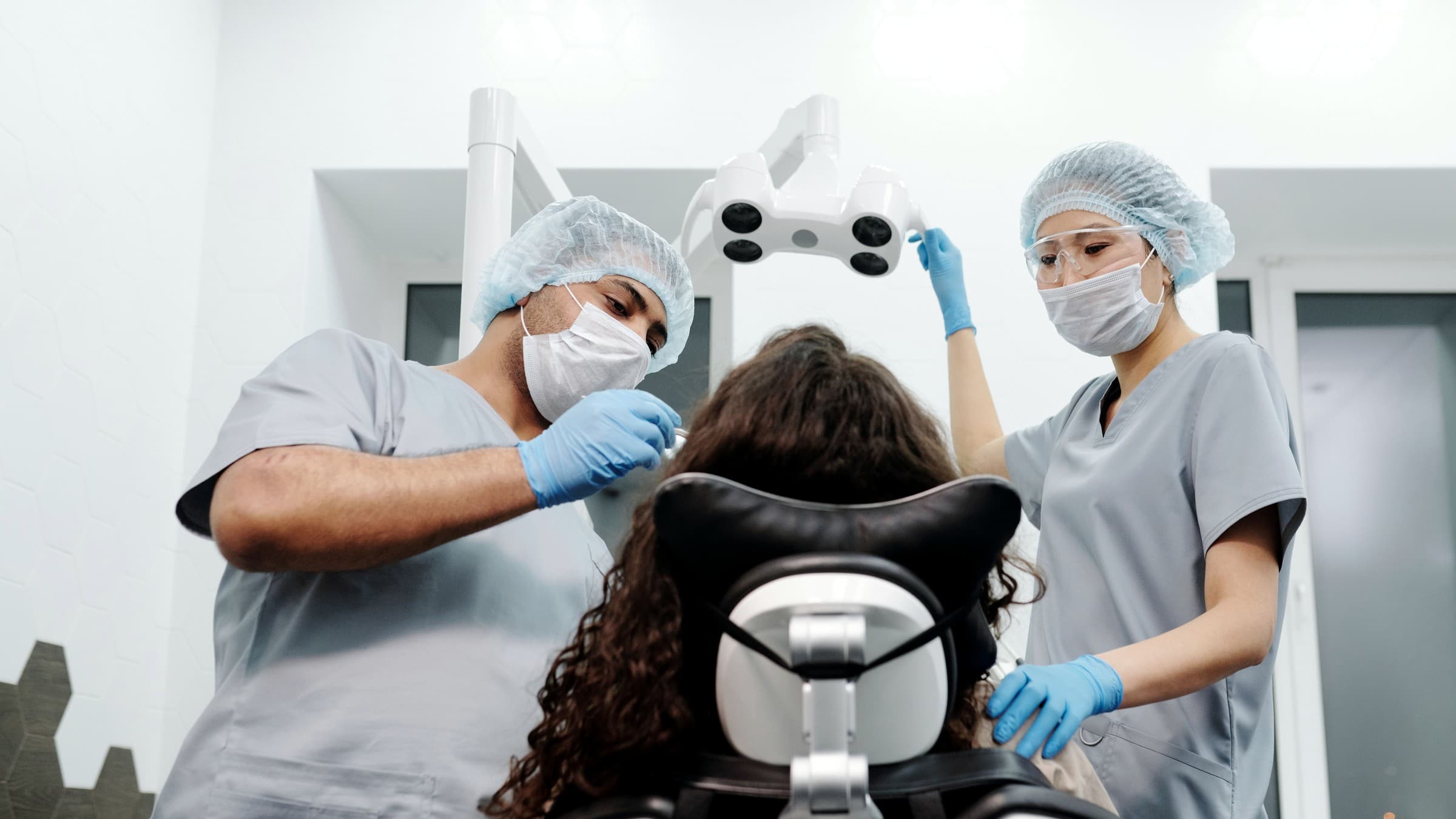
A lean general practice can open with three full-time people:
- One owner dentist: provides treatment and owns clinical decisions.
- One dental assistant: turns rooms, assists procedures, handles sterilization, and manages clinical supplies.
- One front-office employee: answers phones, schedules, verifies benefits, presents estimates, checks patients in and out, and works claims and balances.
Add a hygienist one or two days per week only when confirmed demand supports the chair time. That creates a four-person operating roster without paying for five full-time schedules before patients exist.
A standard four-operatory office may start with five people:
- One owner dentist
- Two dental assistants
- One front-office employee
- One dental hygienist
The BLS reports a 2025 median wage of $48,070 for dental assistants. The BLS reports a 2024 median wage of $94,260 for dental hygienists. Using those national medians, a $45,000 front-desk planning assumption, and a planning allowance for payroll taxes and benefits produces these illustrative monthly costs:
- One assistant: about $4,600 per month
- One front-office employee: about $4,300 per month
- Hygienist two days per week: about $3,600 per month
- Lean non-owner payroll: about $12,500 per month
- Two assistants, one front-office employee, and one full-time hygienist: about $22,600 per month
Local wages, benefits, workers compensation, payroll taxes, overtime, and recruiting costs can move these figures sharply. Use BLS area data and current job postings before finalizing payroll.
What could monthly operating costs look like?
The monthly burn below excludes owner pay and loan payments because those depend on the owner’s household needs and the final financing quote.
Lean two-operatory monthly example
- Rent and utilities: $8,000
- Non-owner payroll and burden: $12,500
- Clinical supplies and lab work: $5,000
- Software, insurance, marketing, bookkeeping, and professional costs: $6,000
- Monthly operating burn before owner pay and debt: $31,500
- Three months of modeled operating burn: $94,500
- Working-capital reserve included in the startup project: $100,000
Standard four-operatory monthly example
- Rent and utilities: $12,000
- Non-owner payroll and burden: $22,600
- Clinical supplies and lab work: $8,000
- Software, insurance, marketing, bookkeeping, and professional costs: $8,000
- Monthly operating burn before owner pay and debt: $50,600
- Three months of modeled operating burn: $151,800
- Working-capital reserve included in the startup project: $100,000
At this cost level, three months of the modeled burn exceeds the $100,000 reserve. It is a stress test, not a viable opening configuration for this project model. Reduce fixed costs, phase hiring, and build the schedule before opening so the ramp fits the reserve. Claims delays, construction delays, slow credentialing, and an empty opening schedule can consume it faster than expected.
Is the schedule turning into collected cash?
A packed calendar alone does not pay the bills. Visits must be completed, collected, and clinically sound. Set appointment types by provider time, room, assistant, and equipment. Protect same week emergency space. Confirm high value appointments, use a clear late cancellation policy, and keep a short call list for gaps. Do not double book unless the clinical flow truly supports it.
At check in, verify identity, coverage, limits, and balance. Present a written estimate that separates expected plan payment from patient responsibility. Collect known portions at service when appropriate. Submit clean claims daily, post remittances by contract, work denials by reason, and review receivables by payer and age weekly.
Track active recall patients, future hygiene visits, near term openings, reappointment at checkout, and dentist exam bottlenecks. The ADA KPI guide suggests tracking collections, claim aging, provider production, new patients, cancellations, and hygiene activity. Use your own trend and payer mix to set goals.
How much money can a dental practice make?
The latest ADA data reports average 2025 gross billings of $965,660 per general dentist in private practice. A separate ADA income analysis reports average 2025 general-dentist income of $215,320.
Those figures describe mature and newer practices together. Gross billings are not cash collections. Dentist income includes pay for clinical work and does not isolate business profit.
Monthly example at $80,000 in collections
- Cash collections: $80,000
- Clinical supplies and lab work: $8,000
- Non-owner staff cost: $22,000
- Rent, utilities, insurance, software, marketing, and other overhead: $20,000
- Fair pay for the owner’s clinical work: $16,000
- Debt service: $5,000
- Business profit: $9,000
- Owner income before personal taxes: $25,000, consisting of $16,000 for dentistry and $9,000 for ownership
Monthly example at $100,000 in collections
- Cash collections: $100,000
- Clinical supplies and lab work: $10,000
- Non-owner staff cost: $25,000
- Rent, utilities, insurance, software, marketing, and other overhead: $23,000
- Fair pay for the owner’s clinical work: $18,000
- Debt service: $6,000
- Business profit: $18,000
- Owner income before personal taxes: $36,000, consisting of $18,000 for dentistry and $18,000 for ownership
These are deterministic planning examples, not forecasts. According to the illustrative models above, the first produces an 11.25% business-profit margin after owner clinical pay and debt, while the second produces an 18% margin. Actual results depend on completed visits, collections, payer mix, procedure mix, staffing, rent, debt, and how quickly the schedule fills.
Public operating example: Park Dental Partners
Park Dental Partners' 2025 Form 10-K reports $244.5 million of revenue, 86 locations, 214 dentists, 43 acquired practices, and 12 de novo openings over the prior decade. Park is not a startup forecast. It shows that growth needs patient demand, dentists, hygienists, clinical hours, and operating systems at the same time.
What can break a good dentist's business?
Overbuilding often causes the first cash squeeze. Extra chairs, premium equipment, and too much space create payments before demand exists. Another trap is treating production like cash. Contract adjustments, denied claims, refunds, slow payers, and uncollected patient balances can turn a strong production report into a weak bank account.
Buying bad goodwill can wreck an acquisition. An acquisition can lose value fast when the seller leaves, patients are inactive, key staff quit, the lease is short, or the treatment style changes. Test retention assumptions before pricing the deal. Tie seller transition duties to clear terms.
Hygiene can also fall out of balance. Empty hygiene time wastes expensive labor. A hygiene schedule booked far beyond capacity frustrates patients and chokes exams and restorative work. Build recall from real active patients and add days in steps.
Owner overload ties the problems together. Charts fall behind, claims age, and small staff problems become turnover. Assign an owner and deadline to each process. Review a one page weekly scorecard. If collections fall, find whether the cause is visits, acceptance, coding, claims, payer delays, or patient balances.
What should happen in the first 90 days?
Days 1 to 30: choose the ownership path and write the clinical scope, target patient, hours, payer plan, and income floor. Screen three trade areas, or obtain acquisition and partner records. Hire a dental attorney and CPA. Build the license matrix, gather quotes, and create base, slow, and severe cash cases.
Days 31 to 60: finish site or purchase diligence. Lock the room plan, equipment phases, vendor schedule, and budget. Submit licenses, permits, payer files, NPI updates, and insurance applications as allowed. Choose the practice system and bank controls. Write the core patient, revenue, safety, privacy, inventory, and close procedures. Recruit against a dated schedule.
Days 61 to 90: complete approvals and vendor tests. Load fees and payer rules. Train staff and run mock calls, patient visits, emergencies, claims, payments, lab cases, and outages. Confirm every license, effective date, policy, supply, and backup. Open with limited capacity. Review visits, collections, claims, schedule use, payroll, safety logs, and concerns weekly.
When does financing fit?
Long lived buildout and equipment usually need long term capital. Working capital covers the ramp before collections steady. An acquisition must leave cash for transition, repairs, payroll, and patient loss.
Match payments to the slow case. Compare principal, rate, fees, total repayment, term, timing, collateral, guarantees, prepayment terms, and reserves. Keep liquidity for payroll, rent, lab bills, taxes, and claim delays. Do not use short daily payment products for a long buildout.
If verified quotes and the slow case support payment, compare SBA loans, equipment financing, and business lines of credit. Approval and terms depend on underwriting.
How much does it cost to start a dental practice?
Use a disciplined $500,000 planning model: $150,000 for construction and leasehold work, $150,000 for clinical equipment and installation, $25,000 for technology and office setup, $25,000 for professional fees, $50,000 for opening and launch costs, and $100,000 for working capital. The working-capital reserve is inside the $500,000 total, not extra cash on top. Actual bids vary. Cold-shell, ground-up, specialty, or premium projects may fall outside this model, so local bids control whether the plan works.
Should I start a dental practice from scratch or buy one?
Start from scratch for control and a clear market gap. Buy if verified patients and cash flow justify the price. A partner track needs written valuation, control, and exit terms.
What belongs in a dental practice business plan?
Include the patient market, service and payer mix, ownership path, location, capacity, staffing, credentialing, marketing, collections workflow, startup budget, monthly cash plan, owner compensation, debt, and slow case.
What is a good dental practice profit margin?
There is no universal margin. Calculate cash collections minus direct clinical cost, staff, overhead, fair market pay for the owner's dentistry, and debt. According to the illustrative worked example above, the business profit margin is 9% after those items.
When should payer credentialing start?
Start as soon as the entity, location, tax ID, licenses, insurance, and provider data let you apply. Track credentialing, contracting, fee schedules, effective dates, electronic claims, remittance, and directory status separately.
Sources